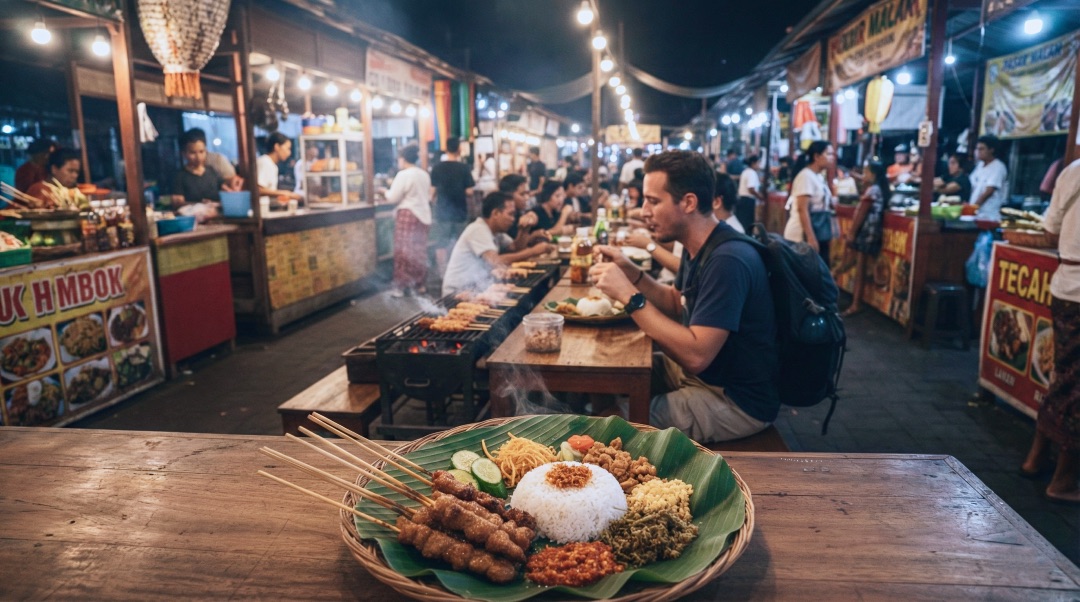
Bali’s street food scene is a culinary paradise for solo travelers, offering authentic flavors, budget-friendly prices, and genuine cultural connections. However, navigating the vibrant world of warungs, food carts, and night markets requires knowledge and caution to ensure your culinary adventures don’t end with digestive distress.
Understanding Bali’s Street Food Landscape
Types of Street Food Venues
Warungs (Local eateries):
- Family-run: Small, often family-operated establishments
- Authentic recipes: Traditional home-style cooking
- Community hubs: Local gathering spots
- Varying hygiene: Standards range from basic to excellent
Food Carts (Kaki Lima):
- Mobile vendors: Push carts or small stalls
- Specialized items: Often focus on one or two dishes
- Fresh preparation: Usually cooked to order
- Popular with locals: Good sign of quality and safety
Night Markets (Pasar Malam):
- Evening operation: 6 PM - 11 PM typically
- Variety: Multiple vendors in one location
- Social atmosphere: Bustling, energetic environment
- Tourist-friendly: Many cater to international visitors
Popular Street Foods to Try Safely
Grilled specialties:
- Sate Lilit: Minced fish or meat on lemongrass skewers
- Sate Ayam: Chicken skewers with peanut sauce
- Ikan Bakar: Grilled fish with spices
- Corn on the cob: Grilled with sweet or savory sauces
Noodle and rice dishes:
- Mie Goreng: Stir-fried noodles with vegetables
- Nasi Goreng: Fried rice with egg and vegetables
- Bakso: Meatball soup with noodles
- Nasi Campur: Mixed rice with various side dishes
Snacks and desserts:
- Martabak: Sweet or savory stuffed pancakes
- Pisang Goreng: Fried bananas with various toppings
- Es Campur: Mixed ice dessert with tropical fruits
- Klepon: Sweet rice cakes with palm sugar
The Science of Street Food Safety
Why Street Food Can Be Safer Than Restaurants
Freshness factors:
- High turnover: Popular vendors sell food quickly
- Cooked to order: Food prepared fresh when you order
- Visible preparation: You can watch the cooking process
- Local clientele: Regular customers ensure quality
Temperature control:
- Hot food hot: Properly cooked foods are safer
- Quick service: Less time for bacteria growth
- Open cooking: Heat kills most harmful bacteria
- Immediate consumption: Food doesn’t sit around
Common Risk Factors
Water contamination:
- Ice cubes: May be made from tap water
- Washed vegetables: Contaminated rinse water
- Drinks: Unbottled water and juices
- Cleaning: Improper sanitation practices
Food handling:
- Bare hands: Direct contact with ready-to-eat food
- Cross-contamination: Raw and cooked foods touching
- Temperature abuse: Food left in danger zone (5°C-60°C)
- Improper storage: Food sitting out too long
Visual Inspection: What to Look For
Green Flags: Signs of Safe Street Food
Cleanliness indicators:
- Clean workspace: Wiped surfaces and organized setup
- Hand washing: Vendor washes hands or uses gloves
- Fresh ingredients: Visible fresh produce and meats
- Proper covering: Food protected from insects and dust
Popularity signals:
- Local customers: Balinese people eating there regularly
- Consistent crowds: Steady flow of customers
- Short wait times: Food doesn’t sit around long
- Regular customers: People returning multiple times
Food preparation:
- Hot cooking: Food cooked thoroughly at high temperatures
- Fresh ingredients: Raw ingredients look fresh and properly stored
- Clean utensils: Cooking tools appear clean and well-maintained
- Protective covering: Food covered when not being served
Red Flags: Warning Signs to Avoid
Hygiene concerns:
- Dirty surfaces: Visible grime on counters and equipment
- Flies and insects: Pests around food preparation areas
- Sick vendors: Staff showing signs of illness
- No hand washing: No visible hand washing facilities
Food quality issues:
- Pre-cooked food: Items sitting out for long periods
- Discolored food: Signs of spoilage or age
- Strange odors: Off smells from food or cooking area
- Improper storage: Food not kept at appropriate temperatures
Location problems:
- Near garbage: Close to waste disposal areas
- Poor drainage: Standing water or sewage nearby
- Dusty roads: Food exposed to road dust and pollution
- Lack of customers: Empty stalls despite good location
Safe Ordering Practices
Communication Strategies
Essential phrases for safety:
- “Mau pesan”: I want to order
- “Baru masak?”: Is it freshly cooked?
- “Pedas tidak?”: Is it spicy?
- “Bisa kurang pedas?”: Can you make it less spicy?
- “Tidak pakai es”: No ice, please
Questions to ask:
- “Kapan ini dimasak?”: When was this cooked?
- “Ada halal?”: Is this halal? (if important to you)
- “Berapa lama sudah?”: How long has this been here?
Smart Ordering Choices
Safest options:
- Freshly cooked: Food prepared while you wait
- Hot and steaming: Foods served piping hot
- Grilled items: High-heat cooking kills bacteria
- Peelable fruits: Fruits you peel yourself
- Bottled drinks: Sealed beverages only
Items to approach with caution:
- Pre-cut fruits: May be washed with tap water
- Raw vegetables: Salads and uncooked items
- Ice cubes: Often made from tap water
- Buffet-style: Food sitting out for extended periods
- Raw seafood: Higher risk of contamination
Timing Strategies for Safe Eating
Best Times to Eat Street Food
Peak meal times (11 AM-2 PM, 6-9 PM):
- Highest turnover: Food sells quickly
- Freshest ingredients: Vendors restock for busy periods
- Full attention: Staff focused on food preparation
- Quality control: Competition ensures better standards
Early morning (6-9 AM):
- Fresh preparation: First batch of the day
- Clean setup: Morning cleaning routines complete
- Local breakfast: Traditional morning foods
- Cooler temperatures: Better food preservation
Times to Avoid
Late night (after 10 PM):
- Leftover food: End-of-day remnants
- Reduced supervision: Staff may be tired
- Lower standards: Cleaning may be postponed
- Limited options: Less variety available
Slow periods (3-5 PM):
- Sitting food: Items prepared earlier may sit
- Reduced turnover: Less frequent fresh cooking
- Staff breaks: Reduced attention to quality
- Temperature abuse: Food may be in danger zone
Personal Hygiene Practices
Before Eating
Hand sanitation:
- Hand sanitizer: Use before handling food
- Wet wipes: Clean hands thoroughly
- Soap and water: Use when available
- Avoid touching face: Keep hands away from mouth and eyes
Surface cleaning:
- Wipe table: Clean eating surface with wet wipe
- Utensil inspection: Check cleanliness of provided utensils
- Plate checking: Ensure plates appear clean
- Napkin use: Use napkins to handle food when possible
During Your Meal
Eating techniques:
- Use utensils: Avoid direct hand contact with food
- Peel when possible: Remove outer layers of fruits
- Hot food first: Eat hottest items first while temperature is high
- Avoid sharing: Don’t share utensils with others
Mindful eating:
- Observe preparation: Watch how food is handled
- Trust instincts: If something seems off, don’t eat it
- Start small: Try small portions first
- Stay hydrated: Drink bottled water only
Building Your Street Food Immunity
Gradual Introduction Strategy
First few days:
- Conservative choices: Stick to well-cooked, familiar items
- Stomach adjustment: Let your digestive system adapt
- Small portions: Try small amounts of new foods
- Observe reactions: Pay attention to how your body responds
After acclimatization:
- Expand variety: Try more diverse options
- Local favorites: Explore popular regional specialties
- Spice tolerance: Gradually increase spice levels
- Confidence building: Develop trust in reliable vendors
Probiotic Protection
Beneficial bacteria:
- Tempeh: Fermented soybean product
- Yogurt: Contains beneficial cultures
- Kefir: Fermented milk drink
- Local fermented foods: Traditional Balinese probiotics
Digestive support:
- Ginger tea: Soothes digestive system
- Turmeric: Anti-inflammatory properties
- Coconut water: Natural electrolytes
- Bananas: Easy to digest and binding
Emergency Preparedness
What to Carry
Medical kit essentials:
- Anti-diarrheal medication: Imodium or similar
- Oral rehydration salts: Prevent dehydration
- Antibiotics: Prescribed by doctor for travel
- Stomach settlers: Pepto-Bismol or equivalent
- Pain relievers: For general discomfort
Contact information:
- Local embassy: Your country’s embassy contact
- Travel insurance: Emergency assistance numbers
- Hotel information: Address and phone number
- Local emergency: Indonesian emergency numbers
When to Seek Medical Help
Warning signs:
- High fever: Temperature above 38°C (100.4°F)
- Bloody stool: Blood in diarrhea
- Severe dehydration: No urination, extreme thirst
- Persistent vomiting: Unable to keep liquids down
- Symptoms lasting: More than 48-72 hours
Medical facilities:
- International clinics: BIMC, Siloam, or similar
- Local hospitals: Public hospitals with emergency rooms
- Pharmacies: For basic medications and advice
- Hotel assistance: Concierge can recommend doctors
Regional Safety Variations
Tourist Areas vs. Local Areas
Tourist areas (Kuta, Seminyak, Ubud):
- Higher standards: Adapted to tourist expectations
- English communication: Easier to discuss dietary needs
- Regulated vendors: More health inspections
- International options: Familiar foods available
Local areas (Rural villages, smaller towns):
- Authentic experience: Traditional preparation methods
- Language barriers: May need translation help
- Variable standards: Less consistent hygiene
- Cultural immersion: Genuine local dining experience
Regional Specialties and Considerations
Southern Bali:
- Seafood focus: Fresh catch, grilled specialties
- Tourist standards: Higher hygiene expectations
- International influence: Fusion foods available
- Price variations: Tourist pricing vs. local pricing
Central Bali (Ubud area):
- Health-conscious: Organic and vegetarian options
- Wellness focus: Healthy preparation methods
- Artisanal vendors: Specialty food producers
- Higher prices: Premium ingredients and preparation
Northern and Eastern Bali:
- Traditional methods: Authentic local recipes
- Lower prices: More affordable options
- Basic facilities: Simpler preparation areas
- Cultural authenticity: Genuine local experience
Technology Tools for Food Safety
Apps and Resources
Translation apps:
- Google Translate: Menu translation and communication
- Indonesian dictionary: Specific food terminology
- Picture translation: Photo-based menu decoding
- Phrase books: Essential food safety phrases
Review platforms:
- Google Maps: Vendor reviews and photos
- TripAdvisor: Tourist experiences and recommendations
- Local food blogs: Insider tips and hidden gems
- Social media: Real-time vendor information
Online Research
Pre-trip planning:
- Food safety guides: Country-specific advice
- Travel forums: Recent traveler experiences
- Health advisories: Government recommendations
- Vaccination requirements: Pre-travel medical preparation
On-the-ground updates:
- Local expat groups: Current safety information
- Travel forums: Recent conditions and recommendations
- Hotel concierge: Local knowledge and advice
- Fellow travelers: Real-time experiences
Cultural Etiquette and Food Safety
Respectful Dining Practices
Ordering etiquette:
- Polite greetings: Start with “Selamat pagi/siang/sore/malam”
- Patient waiting: Allow time for preparation
- Gracious acceptance: Receive food with thanks
- Appreciation: Compliment good food with “Enak sekali!”
Eating customs:
- Right hand use: Use right hand for eating and passing food
- No shoes: Remove shoes at traditional warungs
- Moderate noise: Keep conversation at reasonable level
- Clean plate: Finishing food shows appreciation
Building Vendor Relationships
Regular vendor strategy:
- Find reliable spots: Identify safe, consistent vendors
- Become regular: Return to trusted establishments
- Learn names: Build personal connections
- Show appreciation: Tip well for good service
Community integration:
- Local recommendations: Ask for vendor suggestions
- Cultural respect: Follow local customs and traditions
- Language learning: Basic Indonesian phrases go far
- Share experiences: Positive feedback builds relationships
Budget-Friendly Safe Eating
Maximizing Value, Minimizing Risk
Smart budgeting:
- Quality over quantity: Better to spend more on safe food
- Local pricing: Eat where locals eat for fair prices
- Meal timing: Avoid tourist pricing at peak times
- Portion sharing: Try multiple items safely
Cost-effective safety:
- Bottled water: Essential expense for health
- Hand sanitizer: Small investment, big protection
- Wet wipes: Useful for various situations
- Peelable fruits: Safe, inexpensive snacks
Price Guide for Safe Options
Budget-friendly safe choices ($1-3):
- Grilled satay: Freshly cooked skewers
- Fresh fruit: Whole fruits you peel yourself
- Simple noodles: Basic mie goreng or mie rebus
- Rice dishes: Freshly prepared nasi goreng
Mid-range safe options ($3-6):
- Complete meals: Full plates with multiple items
- Seafood: Freshly grilled fish or shrimp
- Specialty dishes: Regional specialties
- Beverages: Fresh juices and local drinks
Final Thoughts
Navigating Bali’s street food scene as a solo traveler doesn’t have to be a game of Russian roulette with your digestive system. With proper knowledge, observation skills, and cautious optimism, you can enjoy some of the most authentic, delicious, and memorable meals of your travels.
The key is finding the balance between adventure and safety, between cultural immersion and practical caution. Start conservatively, observe carefully, and gradually expand your culinary horizons as you build confidence and identify reliable vendors.
Remember that street food is an integral part of Balinese culture and daily life. By participating safely, you’re not just enjoying a meal - you’re connecting with local traditions, supporting small businesses, and experiencing the true flavors of Bali.
Trust your instincts, respect local customs, and embrace the adventure. The street food experiences that go well will become some of your most cherished travel memories, and even the occasional misadventure becomes part of your travel story.
What are your best street food safety tips for solo travelers in Bali? Share your experiences and advice in the comments below!